
Vocal technique, step by step
The anatomy of a free voice
A method that doesn’t ask you to imagine colours or reach “up” for high notes. It explains which muscles are involved, how they move and how to take each movement into the piece you want to sing.
“Vocal technique is the foundation on which interpretation is built.”Carmen Moreno
The principle
Understand the movement, don’t imitate the sound
Many singers learn by imitation: they copy the sound of their teacher or of a performer they admire and hope it will one day come by itself. Carmen proposes the opposite path. First you understand the anatomical movement that produces a free sound. Then you train it in the vocalise and, finally, you apply it to the piece.
That is why she insists that singing while “imagining a colour” is not a good idea: emotions fluctuate on stage, and the imagined colour with them. If the technical movement is right, however, the sound places itself on the vomer and has the qualities expected of it.
At first, the muscular movements for each interval may feel unusual. With practice you see that they are in harmony with the anatomy of the face and follow a logic, as in ballet, where positions and movements are practised at the barre to achieve the subtle gestures of expression later on.
It is important not to imitate any performer; it is better to analyse the technical strategy.Carmen Moreno · 2015
I don’t promise fun, but the pleasure of achieving a satisfying artistic musical performance.Carmen Moreno
Interactive map
Four movements, one sound
Click each point on the diagram or each tab to discover what happens in the body and how it is worked on in a lesson.
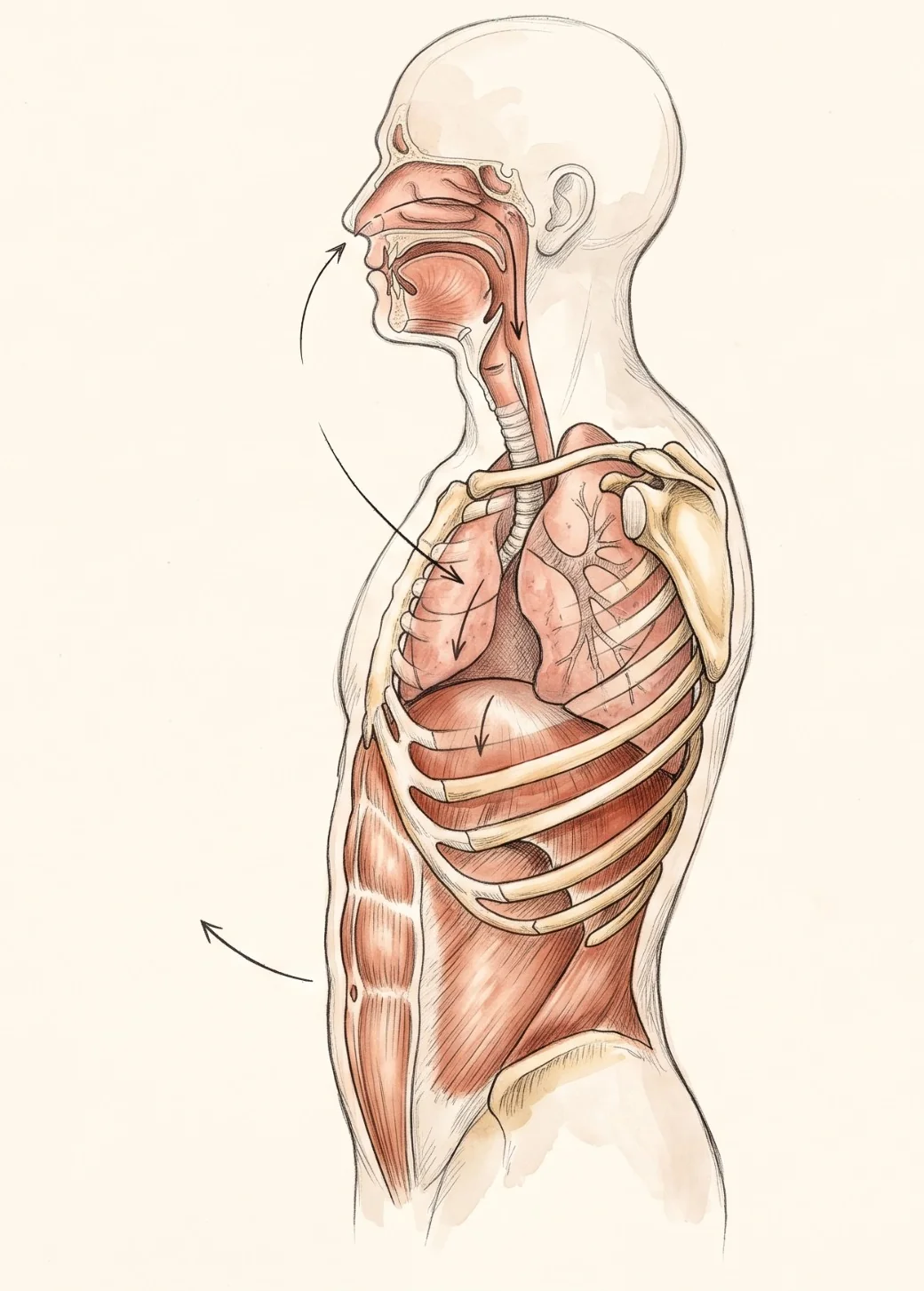
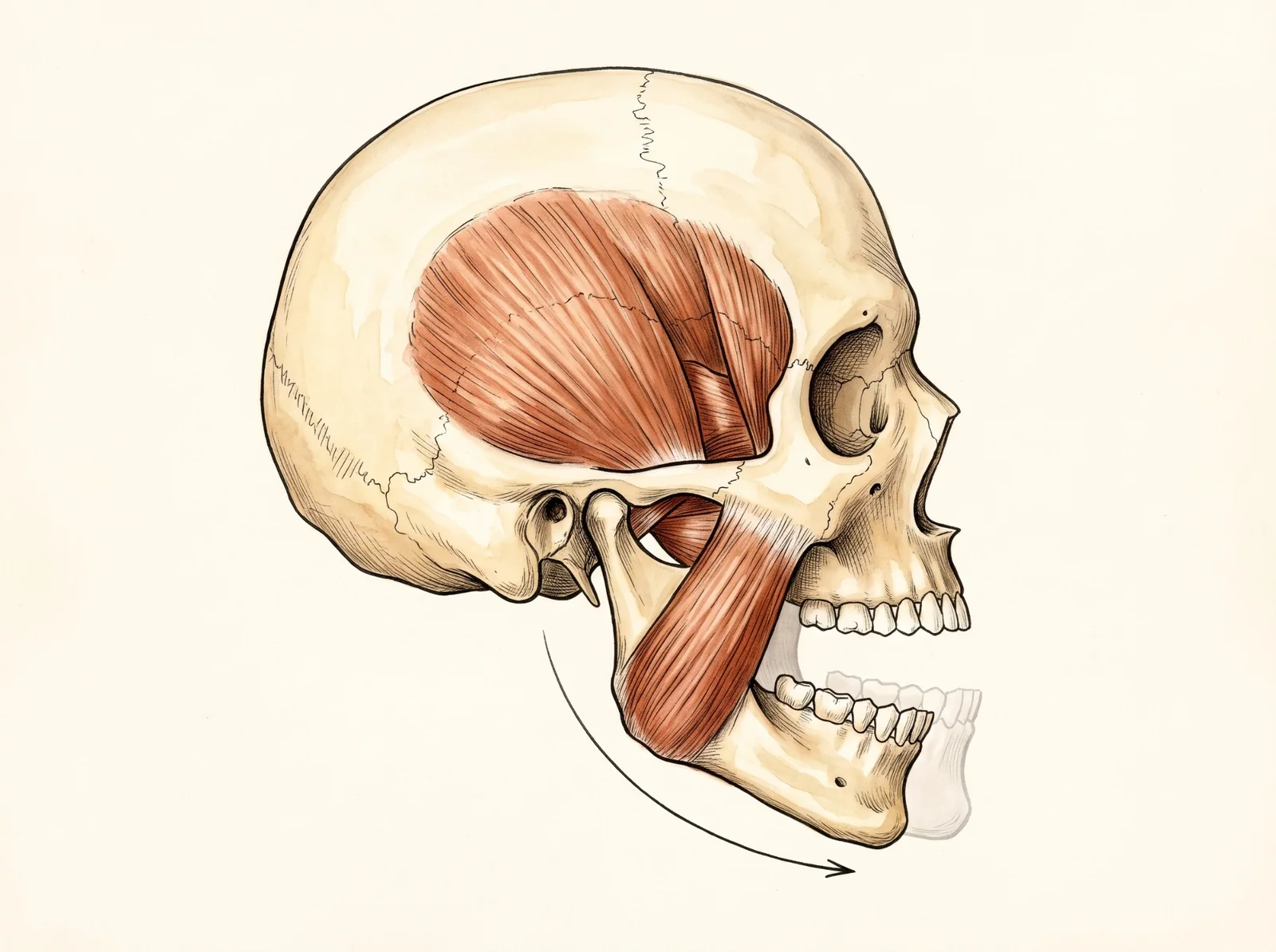
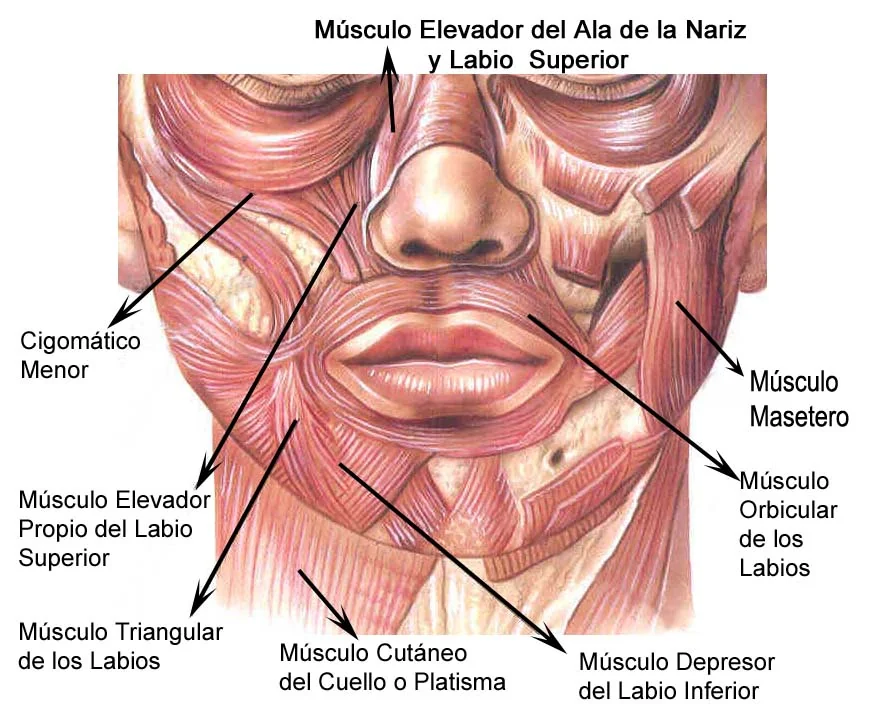
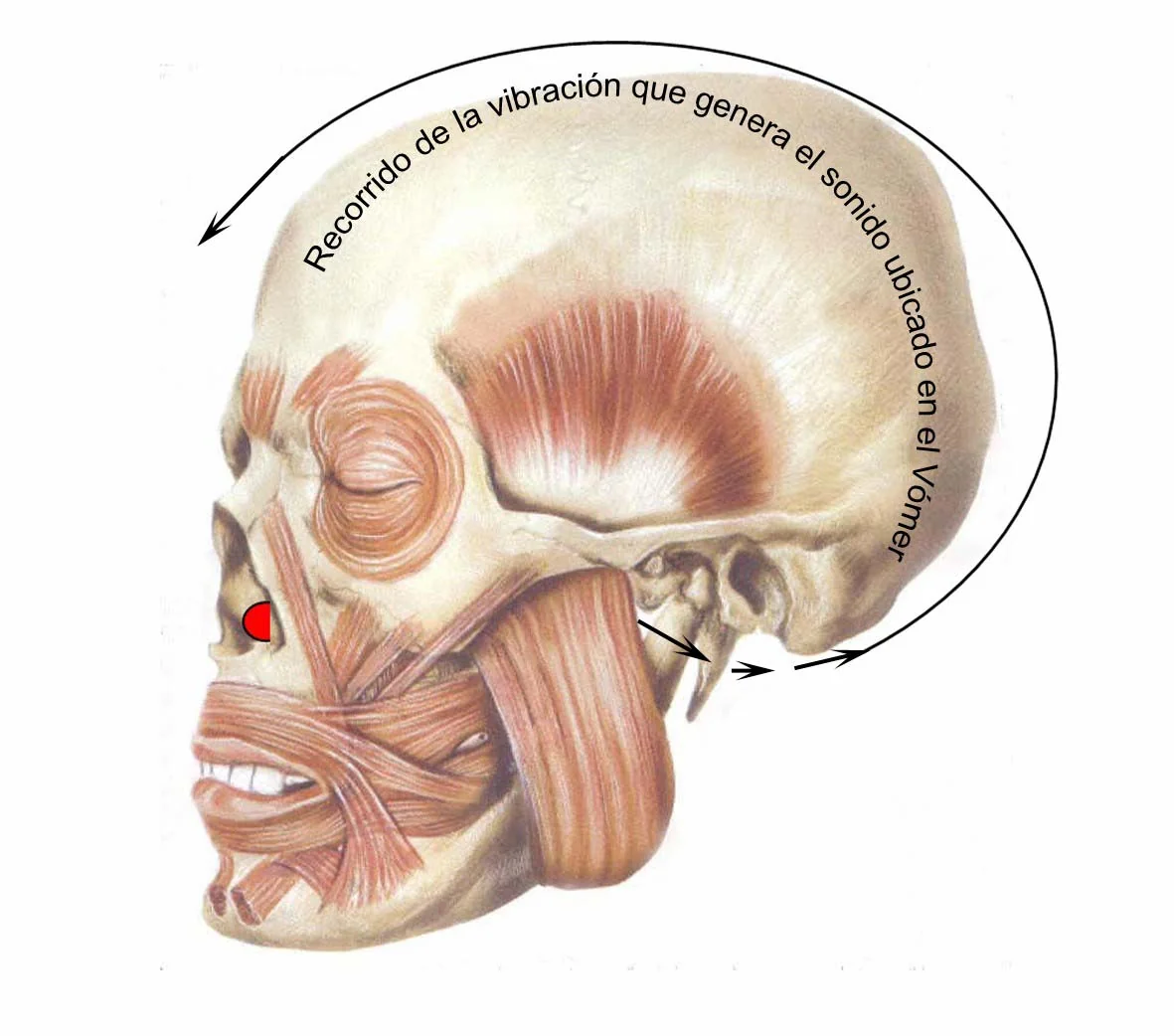
Abdominal breathing
The air that sustains the phrase
The rib and abdominal muscles, with the projection of the rectus abdominis, create the support pressure behind the sound. That pressure lets you sustain phrases, long notes and high notes without forcing the throat.
High, chest breathing produces short-lived high notes, forces you to use physical strength and, in the long run, can damage the vocal folds.
If the piece begins with bars for piano or orchestra, sing those phrases in your head and breathe with the piano where appropriate. That way the voice doesn’t come in with a jolt: it continues the music.
Jaw protrusion
Make space before the note
The jaw moves forward and diagonally, “like a trombone slide”. The lateral and medial pterygoid muscles carry out this movement, and it frees the high note before it arrives.
If your mouth shifts to one side of the face as you sing, only one of the two pterygoids is working: protrusion has not yet been fully understood.
In an interval that starts on a low note, protrude the jaw with pursed lips and make the jaw turn a moment before the second note. The high note will be free and supported, and you’ll be able to sustain it without it sounding shrill.
Lip corners and lips
Bring the harmonics closer, give the sound its ring
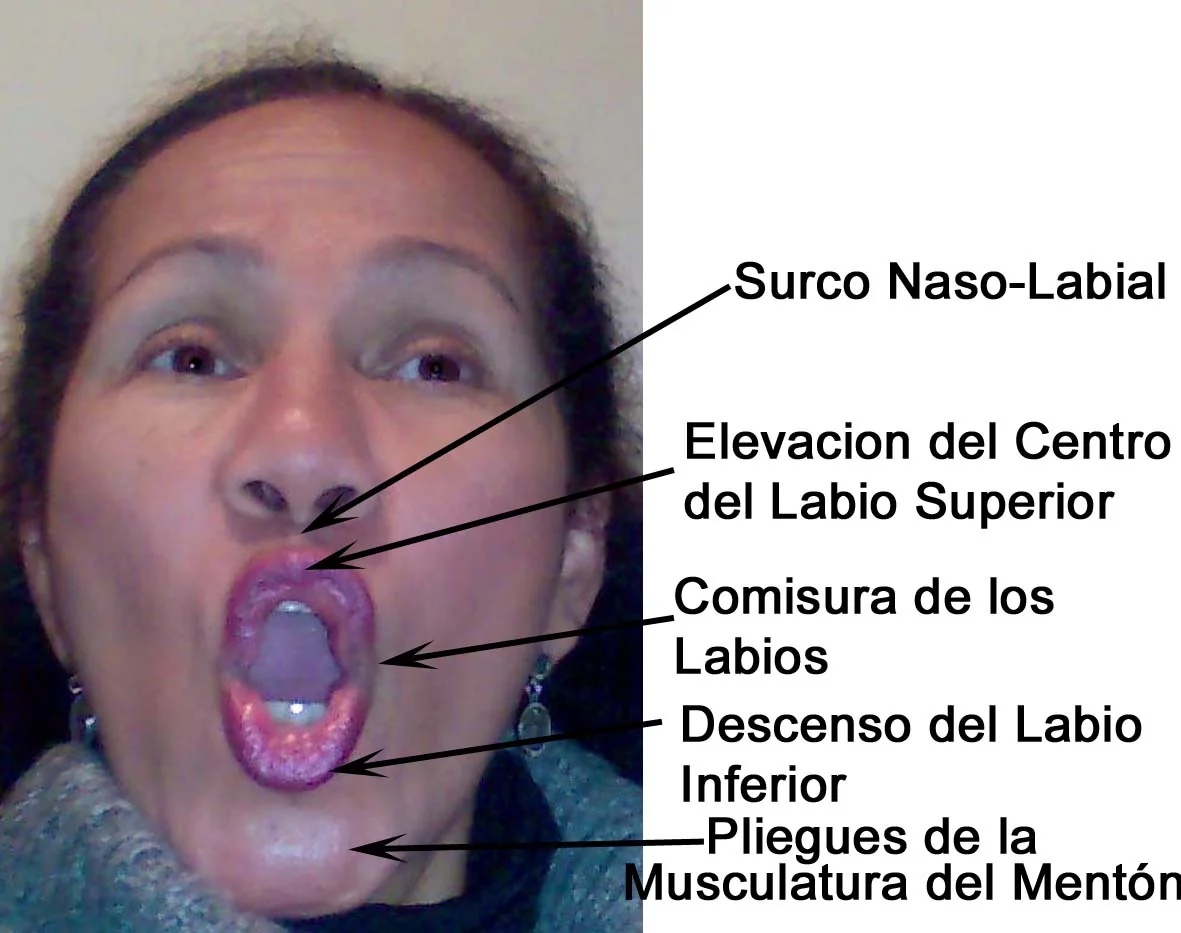
The corners of the mouth stay close together, without opening into a smile. The lower lip drops and shows the lower teeth. The central part of the upper lip rises, thanks to the levator labii superioris muscle, to project the highest notes.
Bringing the lip corners closer also brings the harmonics closer, and the sound gains ring and brilliance.
On high notes, the “e” is replaced by an “a” without opening the lip corners: tenors sing “pensier” as “pensiar”. The audience still understands the word and the sound stays free. To start a phrase on a high note, shape your mouth as in the EA-EA-EA exercise.
Placement on the vomer
Every note in the same place
The ultimate goal of the vocalise is to detect the sound on the vomer and feel its path. When breathing, jaw and lips work together, the sound comes out resonant, free and bright, and the harmonics accompany the fundamental note.
Tilting the head to reach “up” for high notes shows that placement has not yet been understood: attention must return to the vomer, to protrusion and to the levator of the upper lip.
In an octave leap, prepare your mouth for the low note as if you were going to sing the high one straight away, and sing both in that position. That way both stay in the same place in the face, with no more effort than necessary.
A key idea
Vocalising is not warming up
For Carmen, vocalising is not a formality before singing. It is technique applied to the intervals that will later appear in the score.
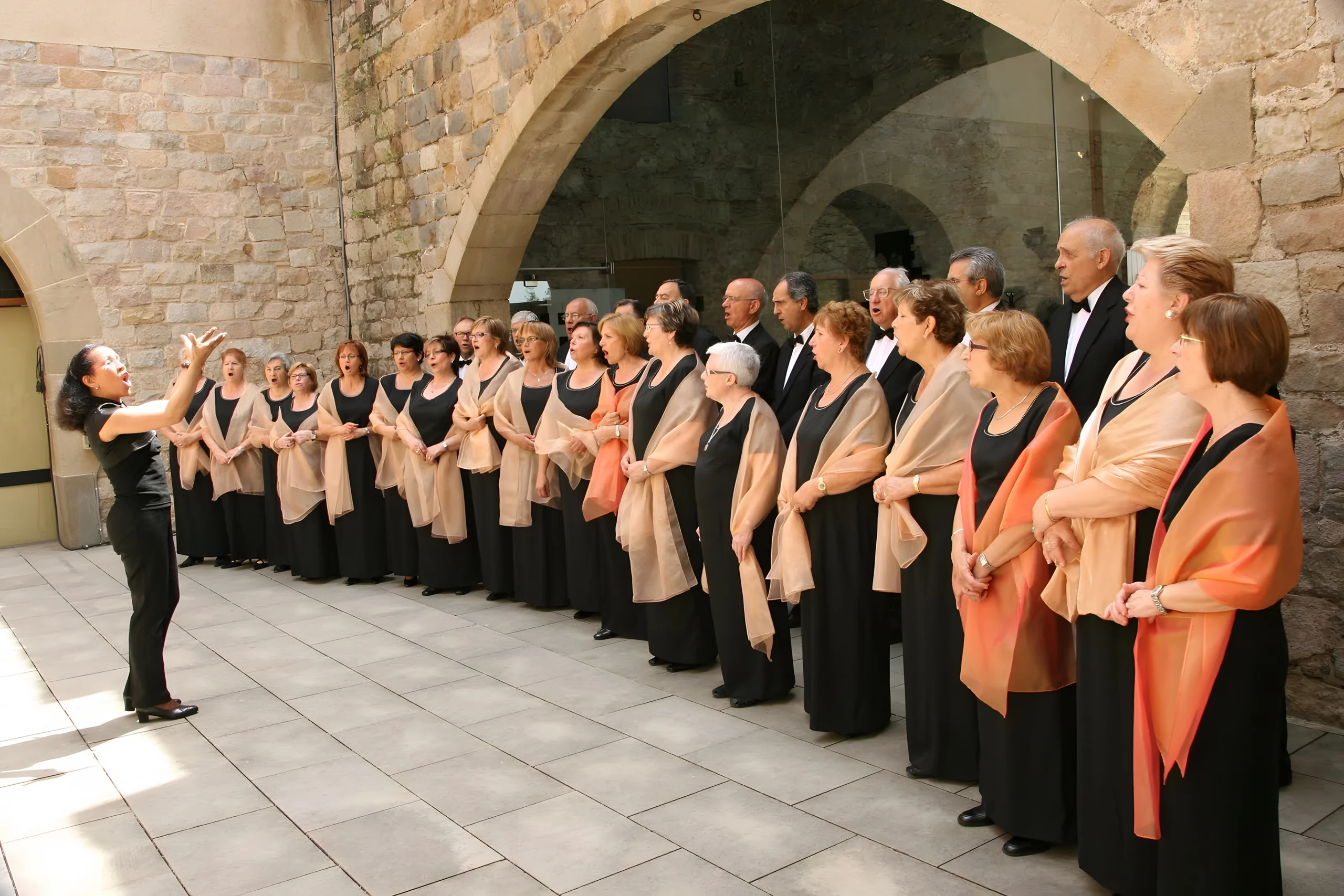
Each exercise is chosen for its intervals: an octave leap, a second, a phrase that starts on a high note. While vocalising, the execution of the movement is observed. Then that same understanding is applied to the same intervals in the piece. She does the same with her choir: half an hour of vocalising before every rehearsal and every concert.
This idea was at the heart of her article in the International Choral Bulletin of the International Federation for Choral Music (2015).
Singers don’t warm up: athletes warm up. We do technique when we vocalise.Carmen Moreno
From exercise to piece
An hour-long lesson
The same lesson online or in person, organised in two halves. This is how Carmen herself describes it.
0–30 min Vocalise: vocal technique
- 1
Two clear goals
Before each exercise she explains which interval is being worked on (a 2nd, a 3rd…) and which facial muscles are involved, such as the zygomaticus major or the depressor of the lips.
- 2
3D images
On the first day, and whenever needed, she shows 3D animations of breathing, jaw protrusion and sound placement.
- 3
Demonstration
She explains and shows how the exercise is done before vocalising begins.
- 4
Progressive intervals
From 2nds and 3rds to increasingly demanding intervals, never going lower or higher than your level allows.
- 5
Instant correction
She points out the “flashes of understanding” and, if there’s a mistake, stops and explains it another way until it is fixed.
- 6
Synchronisation
Little by little she asks you to synchronise abdominal breathing with the movements of the face and jaw. For some it takes little time, for others longer.
It can run longer depending on the student’s level and needs.
30–60 min Applying it to the piece
- 7
Application
What was understood in the exercises is taken into the piece you have chosen. To begin with she prefers a Renaissance piece, for its harmonic structure; later, other genres to suit your range.
In the Barcelona studio the method is the same, with a mirror beside the piano so you can see each movement while you sing.
Signs worth correcting
What the body is telling you
Some movements while singing reveal which part of the technique has not yet been understood. Carmen watches for them in every vocalise.
The mouth shifts sideways
If the jaw moves to the right or left, only one of the two pterygoids is working. Watch the forward movement of protrusion.
The head tilts
It is the tendency to reach “up” for high notes. Placement on the vomer has not yet been understood.
The high note is tight
Starting a high phrase with the mouth closed tightens the sound. The mouth must give that note freedom from the start.
Running out of air
High, chest breathing gives short high notes and forces you to push. Support pressure comes from the abdomen.
Looking for a colour
Imagining the colour of the sound guarantees nothing, because emotion changes on stage. The right movement does.
Smiling while singing
Opening the lip corners into a smile separates the harmonics and takes away ring. The corners stay close together.
Frequently asked questions
About the method
What people most often ask when they first come to Carmen’s vocal technique.
Try a lessonDo I need to read music or have a good voice to start?
No. Studying vocal technique has no age or academic limit: all you need is the wish to sing better. Knowing how to read music helps, but it is not a requirement to start.
Does it work for contemporary music or only for classical singing?
The technical foundation is the same. In pop or contemporary music the lip corners are not kept as close, to stay true to the style, and support pressure is less demanding. If you later want to move into classical singing, you just add those details.
How long before I notice results?
It depends on each person and their starting point. What Carmen always sees is that the time invested in technique is recovered later when studying the pieces: difficulties are solved sooner and you learn to sing well.
What does “becoming independent” from your teacher mean?
That you understand the anatomical movements well enough to correct yourself. Carmen’s goal is that you don’t depend on her forever and that you end up mastering your instrument: your voice.
Where can I learn more?
In her book Mi técnica vocal paso a paso (in Spanish), with a 3D DVD, in the teaching video series and in the Academy’s advice.

Your first lesson
Your voice already knows how to sing. Let’s show it how.
Tell Carmen what you want to sing and what you find difficult. She will suggest a starting point and a schedule that suits you, online or in Barcelona.